
 PHTAYA
 Sports
 Fishing
 Live Casino
 Lottery
 PVP
PVP Slots
Slots Promotion
 News
News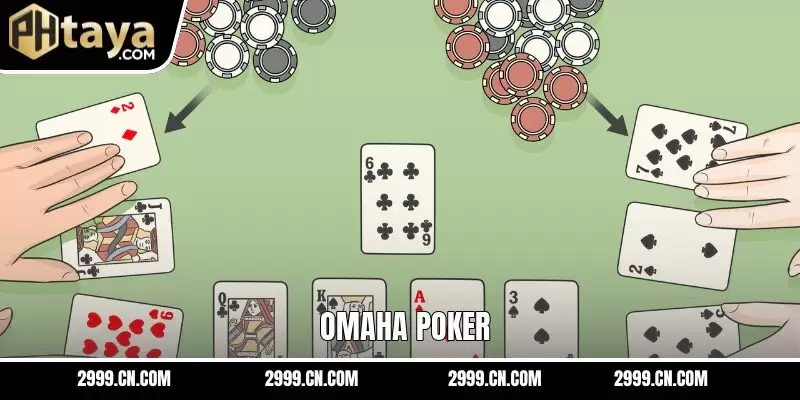
Omaha Poker is a dynamic, action-packed, and intensely complicated card game, widely regarded by professionals as the ultimate strategic challenge for serious players transitioning from Texas Hold’em. PHTAYA offers diverse, competitive Omaha tables, providing a secure and reliable environment for high-stakes intellectual competition.
An overview of common patterns in Omaha Poker gameplay
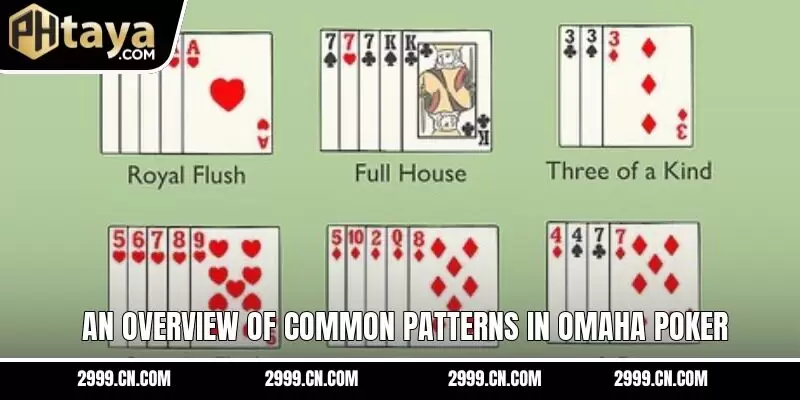
An overview of common patterns in Omaha Poker
Omaha Poker’s complexity comes from players receiving four hole cards but being required to use exactly two, combined with three community cards, to form their final hand. This rule increases the number of possible combinations, leading to more frequent strong hands like flushes and full houses, making the game more volatile than Texas Hold’em.
Strategically, holding ‘double-suited’ hands and aiming for ‘wrapped’ straights is crucial, as the game revolves around making the nut hand. PHTAYA provides resources to help beginners grasp these concepts, emphasizing that solid starting hand selection is essential for success in this fast-paced, high-action format.
Core rules and hand ranking in Omaha Poker
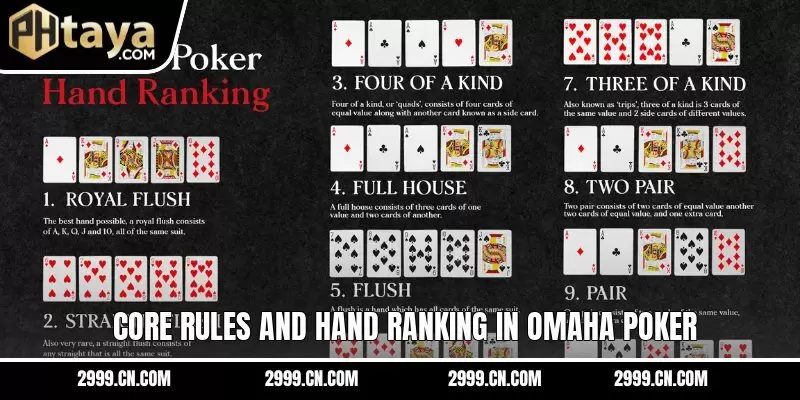
Core rules and hand ranking in Omaha Poker
While the general flow of Omaha Poker mirrors Texas Hold’em (blinds, pre-flop, flop, turn, river, showdown), the hand formation rule completely changes the strategic landscape. Mastering the rule of two from hand, three from board is non-negotiable.
The rule of two from hand, three from board
This is the single most important rule distinguishing Omaha Poker:
- Hole Cards: Players are dealt four private cards.
- Community Cards (Board): Five cards are eventually dealt face-up (Flop, Turn, River).
- Final Hand: The player must use two of their four hole cards and three of the five community cards to create their final five-card hand.
Crucial Example: If the board shows four spades (possible flush), a player must hold two spades in their hand to form a flush. Holding three or four spades in their hand is irrelevant, as only two can be used.
The betting structure: Pot-limit omaha (plo)
The most common variant of Omaha Poker played globally is Pot-Limit Omaha (PLO). This betting structure dictates the maximum amount a player can raise:
- Minimum Raise: The smallest allowable increase must equal or exceed the prior wager or increase.
- Maximum Raise: Can be no more than the current size of the entire pot (including the chips already committed to the current betting round). This structure allows for explosive pots and significantly increases the variance compared to No-Limit Hold’em.
Game flow and stages
The game follows the standard poker cycle:
- Pre-Flop: Players receive four cards and betting begins with the small and big blinds.
- Flop: Three community cards are dealt. Betting ensues. This is where most draws and strong hands are first revealed.
- Turn: The fourth communal card is now revealed. Betting ensues.
- River: The last community card, the fifth one, is now in play. The final betting round occurs before the Showdown.
Hand ranking comparison
Hand rankings in Poker are identical to Texas Hold’em (Royal Flush is highest, High Card is lowest). However, due to the four-card starting hand, the standard winning hand is significantly stronger. You should rarely proceed past the flop without a strong draw or a made hand like a straight, a flush, or a big set.
| Hand Type | Hold’em Frequency | Omaha Frequency | Strategic Implication |
| Flushes/Straights | Relatively Rare | Very Common | Only the Nut (best) straight/flush is often viable. |
| Full Houses | Rare | Common | Expect opponents to hold powerful hands often. |
Unlock high-level strategic maneuvers in Omaha poker
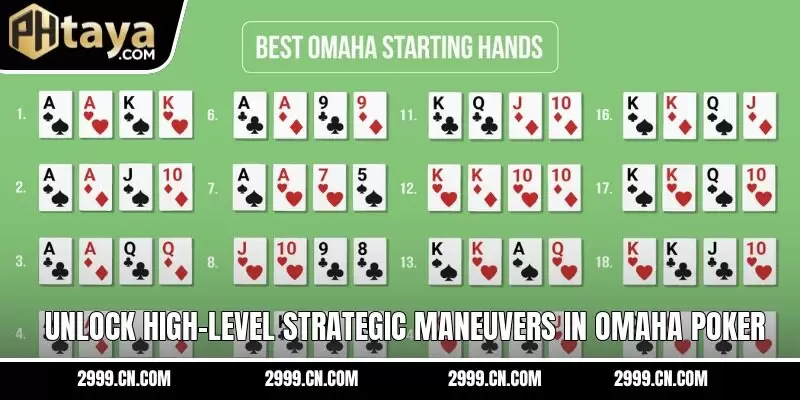
Unlock high-level strategic maneuvers in Omaha poker
Success in Omaha Poker demands a far tighter, more disciplined, and mathematically aggressive approach than standard two-card poker. These five essential tactics directly address the unique complexity and high volatility of the four-card game.
Aggressive drawing and ruthless hand selection are the core tactical principles; applying these guidelines ensures you survive the high variance and capitalize on the massive pots inherent in game.
Ruthless starting hand selection
The most important strategic lesson in Poker is starting hand selection. Unlike Hold’em, where two high cards might be playable, in Omaha, you need connectivity, suitability, and high card value simultaneously.
Always seek hands that work together in multiple ways (wraps, double-suited, big pairs). Hands like A-A-K-K double-suited are premium. Conversely, hands where the four cards are disconnected (A-K-7-2 rainbow) are often garbage and should be folded pre-flop, regardless of the Ace.
Avoiding the deadly second nut trap
Because players have four cards, everyone often has a strong hand. The crucial tactical adjustment in Omaha Poker is betting only when you have the Nut Hand (the best possible hand) or a strong draw to the nut.
Having the Second Nut (the second-best possible hand) on the river can be incredibly expensive, as opponents will rarely call your large river bets unless they hold the absolute best hand. Be prepared to fold strong but non-nut hands when facing heavy action.
Precise calculation of pot equity and outs
The mathematical element is intensified in Omaha Poker. Players often have many more outs (cards that improve their hand) due to the four hole cards. The strategic tactic is to estimate your pot equity (your percentage chance of winning the pot) based on the number of outs and the current pot size.
Only commit significant chips to the pot when you have the correct pot odds to justify your draw. Calculating the wrap draws (many straight outs) is essential for profitable drawing.
Mastering position play and pot control
Position (acting last) is even more critical in Poker than in Hold’em. Position allows you to control the size of the pot, making it easier to play draws cheaply or apply pressure when opponents check.
The tactical advice is to play the majority of your speculative, drawing hands from the late position. From early position, stick only to the absolute premium starting hands (e.g., AAxx double-suited) to protect your stack from aggressive betting.
Bankroll sizing for high volatility
The high frequency of strong hands and the Pot-Limit betting structure mean that Omaha has higher variance than No-Limit Hold’em. This requires larger bankrolls and stricter loss management.
The tactical adjustment is to budget for larger swings and utilize a conservative bet-sizing model to ensure longevity. Never over-bet your bankroll; a common rule is to ensure your bankroll can cover 50 to 100 buy-ins for your chosen stake level at PHTAYA.
Conclusion
Omaha Poker offers a deeply complex and highly volatile game that generously rewards disciplined, aggressive players who possess superior hand selection and mathematical skills. Success hinges on rigorous adherence to the two-card rule and accurate, constant calculation of pot equity against numerous strong draws.
 Air Combat 1942 – Unlock The Hidden Treasures Of The Sky
  Tantalizing Namaste Roulette – Experience Premium Gaming At PHTAYA
  Mighty Viking – Explore The Halls Of Glory On PHTAYA
  Golden Plunder – Join The Grand Treasure Hunt At PHTAYA
  Cai Shen Dao – The Ultimate Slot Adventure On PHTAYA
  Big Money Bass – Master The Best Pro Hacks At PHTAYA