
 PHTAYA
 Sports
 Fishing
 Live Casino
 Lottery
 PVP
PVP Slots
Slots Promotion
 News
News
Gin rummy is a classic card game that rewards skill, calculation, and psychological insight over pure luck. Every draw and discard influences the outcome, creating constant strategic tension between two players. On PHTAYA, the digital environment captures this high-stakes atmosphere while offering modern convenience for all skill levels.
The journey to digital for the modern gin rummy card game

The journey to digital for the modern gin rummy card game
The gin rummy card game traces its roots to the early twentieth century, when Elwood T. Baker introduced it as a faster version of knock rummy. Its popularity surged in mid-century America, especially among Hollywood figures who valued its pace and strategic depth.
Unlike many card games driven by luck, gin rummy emphasizes reading opponents and managing resources wisely. This skill-based nature has secured its place in competitive play, where strong strategy can deliver long-term advantages.
Learn the basic rules to master the gin rummy card game
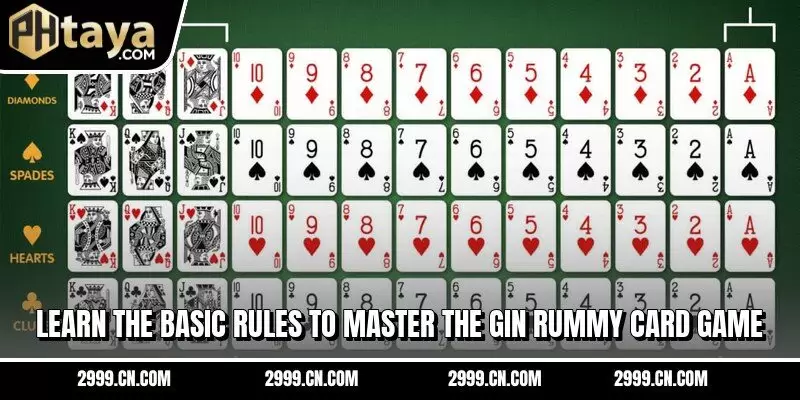
Learn the basic rules to master the gin rummy card game
Success in a gin rummy card game begins with a total mastery of the foundational rules that govern how hands are formed and rounds are won. The objective centers on organizing a ten card hand into valid combinations while minimizing the point value of unmatched cards before the opponent can end the round.
Laying the groundwork for a fierce contest
A standard fifty two card deck is utilized for every match, with jokers strictly excluded from the professional playing field. Each participant receives ten cards dealt face down, while the remaining portion of the deck becomes the stock pile placed in the center.
The top card of the stock is flipped over to establish the discard pile, which serves as the first available upcard for the non dealer. This initial setup provides the base from which players will begin to construct their winning hands through a series of calculated exchanges.
Understanding melds and card combinations
In the gin rummy card game, cards are grouped into structures known as melds to remove them from the scoring of deadwood. A meld consists of either a set or a run, and a single card cannot be used in two different combinations simultaneously.
Sets are three or four cards of identical rank regardless of suit, such as three kings or four sevens. Runs are sequences of three or more consecutive cards within the same suit, such as the four, five, and six of hearts.
Managing deadwood and card values
Cards that do not belong to a valid meld are referred to as deadwood, and these are the only cards that contribute to the score of a player.
The gin rummy card game assigns specific point values to every card in the deck to determine the total count for knocking or scoring. High value cards are particularly dangerous to hold as they can lead to significant point losses if the opponent goes out early.
| Card Rank | Point Value | Strategic Category |
| Ace | 1 Point | Essential Reducer |
| 2 through 10 | Face Value | Transitional Cards |
| Jack | 10 Points | High Risk Deadwood |
| Queen | 10 Points | High Risk Deadwood |
| King | 10 Points | High Risk Deadwood |
The act of signaling completion and achieving a gin hand
A player has the option to end the round through knocking if their total deadwood count is ten points or less after making a discard. This action signals that the player believes their unmatched cards have a lower value than those of the opponent.
The most prestigious victory occurs when a player achieves gin, meaning all ten cards are part of valid melds with zero deadwood remaining. Going gin provides a significant bonus and prevents the opponent from laying off any of their own deadwood cards onto the melds of the winner.
Handling undercuts and lay off rules
If a player knocks with ten or fewer points, the opponent is permitted to lay off their own unmatched cards onto the melds of the knocker to reduce their score. An undercut happens when the defender ends up with a deadwood count equal to or lower than the knocker after these layoffs are complete.
In such cases, the defender wins the round and receives a substantial bonus for outmaneuvering the aggressive player. This risk makes the decision to knock a highly tactical choice that requires careful consideration of the cards already seen in play.
Proven expert strategies for the classic gin rummy card game

Proven expert strategies for the classic gin rummy card game
Achieving a high win rate in the gin rummy card game requires more than just knowing the basic rules of the house. These four elite strategies will help players at PHTAYA refine their approach and maximize their scoring potential against any challenger.
Prioritizing early high value discards
One of the most effective ways to protect against a sudden knock is to get rid of face cards during the first few turns of the round. Since jacks, queens, and kings all count for ten points, holding them without a clear path to a meld creates a massive liability for the player.
By dumping these high value cards early, a participant ensures that even if the opponent goes gin unexpectedly, the resulting score will not be devastating. Professional players often observe which high cards are being discarded to determine if it is safe to hold onto a pair of kings to bait the other person.
Observing opponent draws and discards
The gin rummy card game is a game of imperfect information, yet the discard pile provides constant clues about what the opponent is trying to build. If the rival picks up a seven of spades from the discard pile, it is highly likely they are completing a set of sevens or a spade sequence.
A disciplined player will then avoid discarding any six or eight of spades or other sevens to frustrate the progress of the opponent. Keeping track of the cards that have already been played allows a player to calculate the probability of certain melds still being possible in the deck.
Utilizing the power of the knock early
If a player is fortunate enough to have a deadwood count of ten or less within the first five turns, knocking is often the best course of action. This early in the game, the opponent is likely still holding onto high value cards while trying to arrange their long term runs.
By ending the round quickly, a player can catch the opponent with thirty or forty points of deadwood, leading to a massive score in a short amount of time. Waiting for gin is often a trap because it gives the opponent more time to perfect their hand and potentially undercut the player first.
Conclusion
The gin rummy card game remains a timeless test of strategy and foresight. Mastery requires sharp card management, disciplined discards, and precise timing, all of which you can challenge and refine within the elite PHTAYA gaming community.
 Air Combat 1942 – Unlock The Hidden Treasures Of The Sky
  Tantalizing Namaste Roulette – Experience Premium Gaming At PHTAYA
  Mighty Viking – Explore The Halls Of Glory On PHTAYA
  Golden Plunder – Join The Grand Treasure Hunt At PHTAYA
  Cai Shen Dao – The Ultimate Slot Adventure On PHTAYA
  Big Money Bass – Master The Best Pro Hacks At PHTAYA