
 PHTAYA
 Sports
 Fishing
 Live Casino
 Lottery
 PVP
PVP Slots
Slots Promotion
 News
News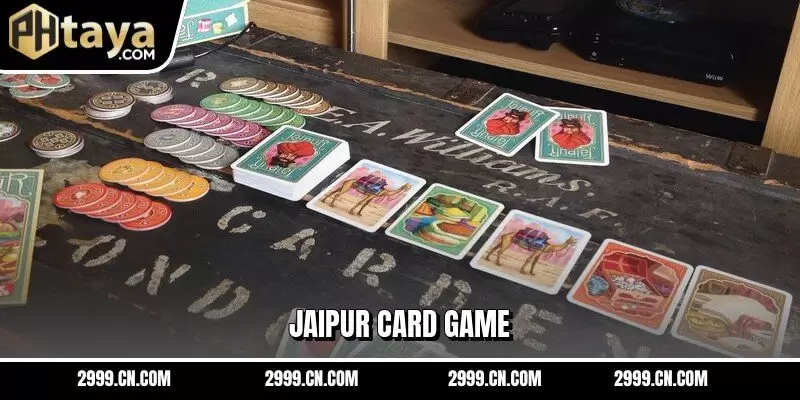
Welcome to PHTAYA Online Casino
Jaipur card game stands as a classic two-player strategy experience built on smart trading and calculated risk. Set in the lively markets of Rajasthan, it challenges players to outthink rivals through timely exchanges. On PHTAYA, the card game comes alive in a premium digital arena where tactical skill defines true market dominance.
Getting started with the vibrant Jaipur card game market

Getting started with the vibrant Jaipur card game market
The appeal of this challenge comes from its blend of simple rules and a demanding economic system that rewards forward planning. Since its release in the late 2000s, the Jaipur card game has earned acclaim for innovative hand management, immersive trading, and a rich cultural backdrop that elevates each match beyond casual play.
What truly sets the Jaipur card game apart is its shifting market dynamics, where shared resources create constant psychological tension. Players must weigh safe gains against risky opportunities, making every decision a balance between probability, intuition, and timing.
Essential steps to play the classic Jaipur card game now
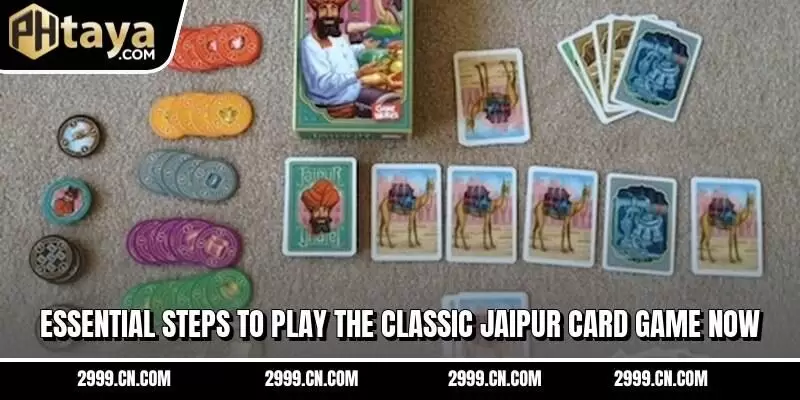
Essential steps to play the classic Jaipur card game now
Gaining a competitive edge requires a thorough understanding of the technical infrastructure that supports the trading floor. The following breakdown of the Jaipur card game structure will ensure that every move made on the PHTAYA platform is executed with professional precision.
Preparing the deck for a high stakes exchange
A standard deck for the card game consists of fifty five goods cards alongside a special set of camel cards that serve as a secondary currency. To begin, three camel cards are placed face up in the center market, accompanied by two random cards from the shuffled deck to create a starting row of five options.
Each participant receives an initial hand of five cards, and any camels dealt into these hands are immediately placed in a personal herd in front of the trader. This distinct separation of goods and livestock is a fundamental pillar of the Jaipur that dictates the pace of every subsequent move.
Navigating the choices on a single turn
A trader must decide whether to take cards from the market or sell goods from their hand to earn tokens. When taking cards in the Jaipur card game, players may select a single good for free, exchange multiple goods with the market, or collect all visible camels to strengthen their herd.
Selling requires discarding matching goods to gain tokens that reflect current market value. Premium items like diamonds and gold demand a minimum of two cards per sale, increasing the strategic challenge for players who struggle with hand management.
Scoring through tokens and bonus seals
Every successful sale rewards the trader with tokens that decrease in value as the market becomes saturated with that specific commodity. This means the first person to sell silk in the card game will earn more points than the second person who sells the same item later in the round.
Additionally, selling three, four, or five cards of the same type in a single action triggers a bonus token that grants extra points, often providing the decisive margin needed for victory. The round ends immediately when three types of tokens are depleted or the draw pile runs out, at which point the trader with the most points earns a Seal of Excellence.
Table of goods values and bonus potential
| Commodity Type | Rarity Level | Initial Token Value | Minimum Sale Requirement |
| Diamonds | Very Rare | Seven Points | Two Cards |
| Gold | Rare | Six Points | Two Cards |
| Silver | Uncommon | Five Points | Two Cards |
| Cloth | Common | Three Points | One Card |
| Spice | Common | Two Points | One Card |
| Leather | Very Common | One Point | One Card |
Managing the herd for tactical advantage
Camels represent a silent power in the Jaipur because they do not count toward the seven card hand limit and can be used to facilitate massive swaps. While taking camels is a zero cost move, the action reveals new cards for the opponent, potentially handing them a rare diamond or gold card on a silver platter.
At the end of the round, the player with the largest herd receives the Camel Token worth five points, which often serves as a tiebreaker in closely contested Jaipur card game matches. Balancing the size of the herd against the risk of helping the rival is the hallmark of a truly seasoned professional.
Smart ways to control the board in Jaipur card game play
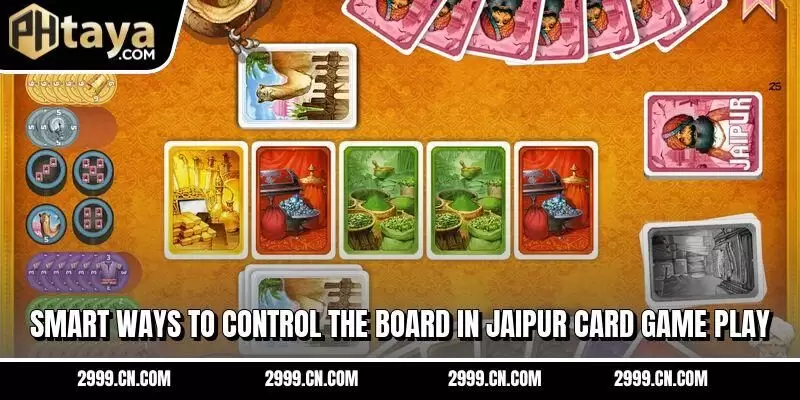
Smart ways to control the board in Jaipur card game play
Success in the digital market of PHTAYA demands more than just a basic knowledge of the rules and card values. These four advanced strategies will elevate any participant from a casual merchant to a master of the Jaipur card game economy.
Mastering the art of the multi card swap
The ability to swap cards from your hand for a larger variety in the market is a powerful tool for controlling the flow of the session. In a professional Jaipur, an elite player will often use camels to pick up three or four different goods at once, denying the opponent the chance to build a specific set.
This move also forces the opponent to deal with a market full of camels, which they might be forced to take, subsequently revealing five new cards for you to inspect. Mastering this exchange rhythm allows a trader to dictate which goods are available and when the high value tokens are claimed.
Timing the market for maximum bonus rewards
While selling early secures the highest value tokens, holding out for a five card sale in the Jaipur card game can yield a bonus worth up to ten extra points. A smart trader monitors the remaining token stack for each good to determine if the bonus is worth the risk of the opponent selling first.
If only two tokens remain in the spice stack, for example, there is no point in waiting for a massive sale since the points are already dwindling. In the Jaipur, the most successful merchants are those who can pivot their strategy from quantity to speed based on the current state of the market board.
Defensive trading and resource denial
Sometimes the best move in a card game is not the one that helps you, but the one that hurts the opponent the most. If you notice a rival collecting silver cards, taking the last silver from the market even if you do not need it can stall their progress and force them to waste a turn swapping.
This predatory approach to the card game ensures that the rival never gets comfortable or builds a significant lead in high value commodities. By constantly interrupting their patterns, you maintain the initiative and force them to react to your moves rather than pursuing their own optimal path to victory.
Conclusion
The path to becoming a legendary merchant requires a blend of sharp observation, rapid adaptation, and a deep respect for the Jaipur card game mechanics. PHTAYA offers the perfect digital environment to refine these skills against a global community of traders who are all vying for the favor of the Maharaja.
 Air Combat 1942 – Unlock The Hidden Treasures Of The Sky
  Tantalizing Namaste Roulette – Experience Premium Gaming At PHTAYA
  Mighty Viking – Explore The Halls Of Glory On PHTAYA
  Golden Plunder – Join The Grand Treasure Hunt At PHTAYA
  Cai Shen Dao – The Ultimate Slot Adventure On PHTAYA
  Big Money Bass – Master The Best Pro Hacks At PHTAYA